
Categoria: Uncategorized

  • Why Crypto Casinos Don’t Rely on Banks

    Why Crypto Casinos Don’t Rely on Banks

    Traditional online casinos depend heavily on banks and payment processors to handle deposits and withdrawals. This often leads to delays, geographic restrictions, and additional fees. In contrast, the crypto casino no banks model removes intermediaries by using blockchain-based transactions. This approach enables faster, borderless payments and greater user control over funds. However, bankless gambling also introduces new risks and responsibilities. In this guide, we explain how decentralized payments work, why crypto casinos avoid banks, and what players should consider before using these systems.

    Removing Banks from Gambling

    Crypto casinos operate using blockchain networks instead of traditional financial institutions. When players deposit or withdraw funds, transactions are processed directly between wallets without involving banks.

    This peer-to-peer structure eliminates intermediaries, reducing dependency on third-party approval systems. As a result, transactions can be executed globally without the need for
    banking infrastructure.

    Faster Global Payments

    One of the main advantages of bankless gambling is speed. Traditional banking systems may take hours or even days to process withdrawals, especially across international borders.

    With cryptocurrencies, transactions can be completed in minutes or even seconds, depending on the network. This allows players to access winnings more quickly and reduces waiting times
    associated with manual approvals.

    Fewer Restrictions and Greater Access

    Bank-based systems often impose geographic and regulatory restrictions that limit access to online gambling platforms. Crypto casinos reduce these barriers by allowing users to transact
    directly on blockchain networks.

    Players in regions with restricted or unavailable traditional payment methods benefit from increased accessibility. However, local regulations still apply, and users remain responsible for
    complying with applicable laws.

    Downsides of Bankless Systems

    While removing banks offers clear advantages, it also introduces trade-offs:

    • No chargebacks or transaction reversals
    • Increased responsibility for wallet security
    • Exposure to crypto price volatility
    • Limited consumer protection compared to traditional banking

    Without intermediaries, users must take full responsibility for managing their funds and ensuring transaction accuracy.

    Are Banks Completely Removed?

    In most crypto casino transactions, banks are not directly involved. However, they may still play a role when users convert fiat currency into cryptocurrency or withdraw funds back into
    traditional financial systems.

    This means that while gambling itself can be bankless, entry and exit points may still interact with banking infrastructure.

    FAQs

    Are banks involved at all?

    Generally, banks do not participate in crypto transactions within casinos, but they may facilitate the conversion between fiat and cryptocurrency.

    Is bankless gambling legal?

    Legality depends on local regulations. Using cryptocurrency does not bypass legal requirements in a user’s jurisdiction.

    What are the risks?

    Risks include irreversible transactions, security vulnerabilities, price volatility, and reduced consumer protections.

    Conclusion

    Crypto casinos operate on a bankless model that prioritizes speed, accessibility, and user control. By removing traditional financial intermediaries, they enable faster global payments and
    fewer restrictions. However, this shift also places greater responsibility on players to manage security and understand the risks involved. While decentralized payments redefine the gambling experience, informed decision-making remains essential for safe participation.

  • How Long Crypto Confirmations Take

    How Long Crypto Confirmations Take

    When sending cryptocurrency, a transaction is not considered final until it receives confirmations on the blockchain. Many users expect instant transfers, but crypto confirmation time depends
    on several technical factors. From network congestion to transaction fees, multiple variables influence how quickly a transfer is processed. Understanding blockchain confirmation speed helps users manage expectations, avoid unnecessary delays, and make better decisions when depositing or withdrawing funds. In this guide, we explain what affects confirmation times, how many confirmations are typically required, and whether users can accelerate the process.

    What Is a Crypto Confirmation?

    A confirmation occurs when a transaction is included in a block and added to the blockchain. Each additional block added after that increases the number of confirmations, making the transaction more secure and irreversible.

    For example, once a transaction is confirmed in one block, it has one confirmation. As more blocks are added, the confirmation count increases, reducing the likelihood of reversal or network reorganization.

    Why Confirmation Times Vary

    Crypto confirmation times are not fixed. They depend on several factors:

    • The blockchain network being used
    • The level of network congestion
    • The transaction fee attached
    • The size and complexity of the transaction

    Some networks process transactions in seconds, while others may take several minutes or longer, especially during periods of high demand.

    Network Congestion Explained

    Blockchain networks have limited capacity per block. When many users attempt to send transactions simultaneously, the network becomes congested.

    Miners or validators prioritize transactions with higher fees during congestion. Lower-fee transactions may remain pending longer, increasing confirmation time. This is why the same transaction can be fast at one moment and slow at another.

    How Many Confirmations Are Needed?

    The number of required confirmations depends on the platform and the level of security needed. For smaller transactions, fewer confirmations may be acceptable. For larger amounts, more
    confirmations provide greater assurance that the transaction is final.

    Crypto casinos and exchanges often define their confirmation requirements before crediting deposits or processing withdrawals.

    Can Confirmations Be Sped Up?

    In some cases, users can influence confirmation speed by increasing the transaction fee. Higher fees incentivize validators to include the transaction sooner.

    Some networks also support transaction replacement mechanisms that allow users to resend a transaction with a higher fee. However, not all blockchains offer this feature, and it must be used carefully.

    Common Misconceptions About Confirmation Speed

    A common myth is that all crypto transactions are instant. While some networks are faster than others, most still require confirmation time.

    Another misconception is that confirmations depend solely on the platform receiving the funds. In reality, they depend on the blockchain network itself, not the casino or wallet provider.

    FAQs

    What affects confirmation time?

    Network congestion, transaction fees, blockchain design, and transaction size all influence confirmation speed.

    How many confirmations are needed?

    It depends on the platform, but more confirmations generally provide greater security.

    Can confirmations be sped up?

    Yes, in some cases, this can be achieved by increasing transaction fees or using replacement mechanisms, depending on the network.

    Conclusion

    A combination of network conditions, transaction fees, and blockchain design influences the time it takes for crypto confirmations. While some transactions are processed quickly, others may take longer during periods of congestion. Understanding how confirmations work allows users to set realistic expectations and make informed decisions when sending funds. In crypto transactions, speed is not guaranteed, but it can often be optimized with the right approach.

  • What Happens If You Send Crypto to the Wrong Address

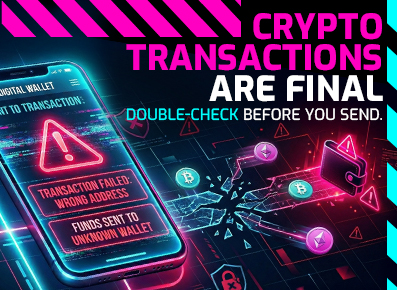
    What Happens If You Send Crypto to the Wrong Address

    Sending cryptocurrency is fast and efficient, but it comes with a critical responsibility: accuracy. Unlike traditional banking systems, there is no central authority to reverse a mistake. If you
    send crypto to the wrong address, the transaction is usually permanent. This makes understanding the risks and prevention methods essential for anyone using blockchain-based platforms. In this guide, we explain why crypto transactions cannot be reversed, the most common sending errors, rare recovery scenarios, and how to avoid a lost crypto transaction.

    Why Crypto Transactions Are Irreversible

    Blockchain transactions are designed to be final. Once a transaction is confirmed on the network, it becomes part of an immutable ledger that cannot be altered or reversed.

    This design ensures security and prevents fraud, such as double-spending. However, it also means there is no “undo” function. No bank, casino, or platform can retrieve funds once they are sent to the wrong address and confirmed on-chain.

    Common Mistakes When Sending Crypto

    Many lost crypto transactions result from avoidable errors. The most frequent include the following:

    • Entering an incorrect wallet address
    • Copy-paste mistakes or malware altering addresses
    • Sending funds to the wrong blockchain network
    • Using incompatible wallet types
    • Failing to double-check transaction details

    Even a single incorrect character in an address can redirect funds permanently.

    Rare Recovery Scenarios

    In most cases, lost crypto cannot be recovered. However, there are limited exceptions:

    • If the receiving address is controlled by a known platform (such as an exchange), support teams may assist in recovery
    • If the transaction has not yet been confirmed, it may be possible to cancel or replace it (depending on the network)
    • If you control both addresses involved, recovery is straightforward

    Outside of these scenarios, recovery is extremely unlikely due to the decentralized nature of blockchain systems.

    How to Avoid Sending Crypto to the Wrong Address

    Prevention is the most effective strategy. Best practices include:

    • Always double-check the wallet address before sending
    • Use copy-and-paste carefully and verify the first and last characters
    • Send a small test transaction before large transfers
    • Confirm the correct blockchain network is selected
    • Avoid using unsecured devices or networks

    These simple steps significantly reduce the risk of a lost crypto transaction.

    FAQs

    Can lost crypto be recovered?

    In most cases, no. Recovery is only possible in rare situations, such as when the receiving address belongs to a platform that can assist.

    Why can’t transactions be reversed?

    Because blockchain systems are designed to be immutable, meaning confirmed transactions cannot be altered or undone.

    How to avoid this mistake?

    Verify addresses carefully, use test transactions, and ensure correct network selection before sending funds.

    Conclusion

    Sending crypto to the wrong address is one of the most serious and irreversible mistakes in blockchain usage. While the system’s immutability ensures security, it also eliminates the possibility of refunds or chargebacks. Understanding common errors and applying basic verification steps can prevent costly losses. In crypto transactions, accuracy is not optional; it is essential.

  • How Mobile Crypto Casinos Work

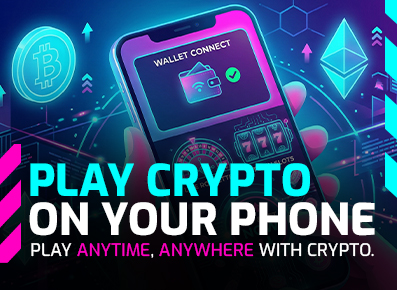
    How Mobile Crypto Casinos Work

    Mobile usage now dominates online activity, and crypto gambling is no exception. A mobile crypto casino allows players to access games, manage funds, and place bets directly from smartphones or tablets. While the core functionality remains similar to desktop platforms, mobile environments introduce specific differences in wallet connectivity, user experience, and security considerations. In this guide, we explain how mobile crypto casinos work, how mobile wallets integrate with platforms, what UX differences to expect, and the risks associated with public networks and mobile usage.

    What Is a Mobile Crypto Casino?

    A mobile crypto casino is a platform optimized for mobile devices, either through a responsive website or a dedicated crypto casino app. These platforms allow users to deposit, withdraw, and play using cryptocurrencies directly from their phones.

    Instead of traditional login systems, many mobile crypto casinos rely on wallet-based authentication, where users connect their crypto wallet to access the platform. This approach aligns with Web3 principles and reduces reliance on passwords.

    Mobile Wallets Explained

    Mobile wallets play a central role in mobile gambling. Applications such as browser-based wallets or dedicated wallet apps allow users to store, send, and interact with cryptocurrencies.

    When accessing a crypto casino, the user connects their wallet through a secure interface. This connection enables deposits, withdrawals, and gameplay interactions without transferring full
    custody of funds until a transaction is executed.

    The process is designed to be fast, but it requires careful handling to avoid security risks.

    User Experience Differences on Mobile

    Mobile crypto casinos are designed with simplified navigation and touch-based interaction in mind. Compared to desktop platforms, mobile interfaces prioritize:

    • Faster loading times and lightweight design
    • Simplified menus and streamlined game access
    • Optimized layouts for smaller screens

    However, some advanced features or detailed analytics may be less accessible on mobile due to screen size limitations.

    Security on Mobile Devices

    Mobile gambling introduces specific security considerations. While blockchain transactions remain secure, the device environment can be vulnerable if not properly managed.

    Key risks include:

    • Use of unsecured public Wi-Fi networks
    • Phishing attempts through mobile browsers or apps
    • Malware or compromised applications
    • Accidental approval of malicious wallet connections

    Using secure networks, keeping software updated, and verifying connections carefully are essential practices for safe mobile gambling.

    Risks of Public Networks

    Public Wi-Fi networks can expose users to interception attacks or malicious redirects. When accessing a mobile crypto casino, it is recommended to use trusted networks or mobile data connections.

    Avoid performing sensitive actions, such as withdrawals or wallet connections, on unsecured networks to reduce exposure to potential threats.

    FAQs

    Are mobile casinos safe?

    They can be safe when using reputable platforms, secure wallets, and trusted networks. User behavior plays a key role in overall security.

    Do mobile casinos have limits?

    Limits depend on the platform, not the device. Mobile and desktop versions typically share the same rules and restrictions.

    Is mobile gambling secure?

    Yes, but only if proper precautions are taken, including secure wallet usage and avoiding public or unsecured connections.

    Conclusion

    Mobile crypto casinos offer convenience and flexibility, allowing players to gamble from anywhere with a connected device. While the core mechanics remain consistent with desktop platforms, mobile environments require additional attention to security and usability. By understanding how mobile wallets work, recognizing UX differences, and avoiding common risks such as public networks, players can enjoy a safer and more efficient mobile gambling experience.

  • Can Crypto Casinos Be Audited

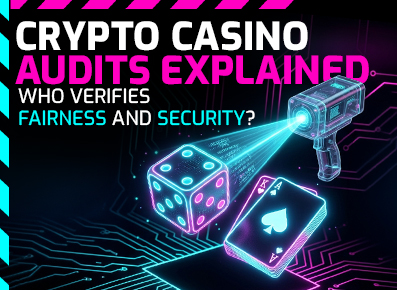
    Can Crypto Casinos Be Audited

    Trust is a critical factor in online gambling, and in crypto environments, it is supported by both traditional audits and blockchain-based verification methods. Many players assume that decentralization eliminates the need for audits, but this is not entirely accurate. A crypto casino audit helps validate system integrity, fairness, and security practices. At the same time,
    blockchain audit gambling models introduce new forms of transparency through on-chain verification. In this guide, we explain who audits crypto casinos, what audits actually cover, how they differ from provably fair systems, and where their limitations lie.

    Who Audits Crypto Casinos?

    Crypto casinos can be audited by independent third-party firms specializing in software testing, cybersecurity, and blockchain analysis. These organizations review platform systems to ensure
    they function as intended.

    For centralized platforms, auditors typically evaluate RNG systems, payout accuracy, and internal controls. For decentralized platforms, audits often focus on smart contract security, code integrity, and potential vulnerabilities.

    The credibility of an audit depends heavily on the reputation and expertise of the auditing firm.

    What Do Audits Actually Verify?

    A crypto casino audit may include several layers of verification:

    • Fairness of game outcomes (RNG or algorithm validation)
    • Accuracy of payout calculations
    • Security of smart contracts (for decentralized systems)
    • Protection against exploits or manipulation
    • Compliance with stated rules and probabilities

    Audits aim to confirm that the platform behaves according to its documented logic. However, they do not guarantee future performance, only that the system was functioning correctly at the time of review.

    Audits vs Provably Fair Systems

    Audits and provably fair systems serve similar goals but operate differently.

    Audits are periodic and conducted by external experts. They provide a snapshot of system integrity at a specific point in time. Players must trust the auditor’s findings and the operator’s
    continued compliance.

    Provably fair systems, by contrast, allow players to verify outcomes themselves in real time using cryptographic methods. This reduces reliance on third parties and increases transparency.

    Many modern crypto casinos combine both approaches to strengthen trust.

    Audit Limitations

    While audits are valuable, they have inherent limitations:

    • They are not continuous and may become outdated
    • They depend on the scope defined by the auditor
    • They do not prevent future code changes or vulnerabilities
    • Players cannot always independently verify audit results

    For decentralized systems, even audited smart contracts can still contain undiscovered flaws. This is why audits should be viewed as one layer of trust, not a complete guarantee.

    Can Players Audit Results Themselves?

    In traditional audited systems, players cannot directly audit outcomes beyond reviewing reports. However, in blockchain-based environments, players can verify transactions and, in some
    cases, game results through on-chain data.

    Provably fair systems go further by allowing direct verification of each outcome, bridging the gap between formal audits and real-time transparency.

    FAQs

    Who audits crypto casinos?

    Independent third-party firms specializing in software security, RNG validation, and blockchain analysis conduct audits.

    What do audits verify?

    They verify fairness, payout accuracy, system integrity, and security against vulnerabilities.

    Can players audit results?

    Players can verify some data on-chain, but full audits require technical expertise. Provably fair systems offer more direct verification.

    Conclusion

    Crypto casino audits play an important role in validating fairness and security, but they are not a complete substitute for transparency. While audits provide expert verification at a specific point in time, blockchain-based systems introduce continuous visibility through on-chain data. Understanding the strengths and limitations of audits helps players evaluate platforms more
    effectively. In practice, the most trustworthy crypto casinos combine independent audits with provably fair mechanisms to create a more robust trust framework.

  • How RNG Works in Crypto Casinos

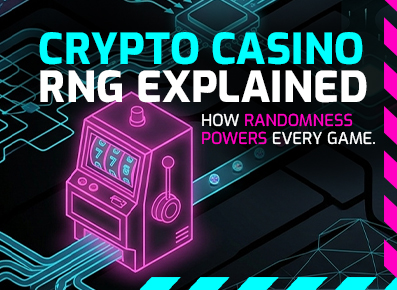
    How RNG Works in Crypto Casinos

    Randomness is at the core of every casino game. Whether spinning a slot or dealing cards, outcomes must be unpredictable and fair. In traditional systems, this is handled by software
    known as a random number generator (RNG). In crypto environments, RNG remains widely used, but it now coexists with blockchain-based alternatives such as provably fair systems.
    Understanding crypto casino RNG helps players evaluate fairness, reliability, and transparency. In this guide, we explain how RNG works, how it is tested, its limitations, and how it compares to newer decentralized approaches.

    What Is RNG in Gambling?

    A random number generator is an algorithm that produces sequences of numbers with no predictable pattern. In casino games, these numbers determine outcomes such as reel
    positions, card distribution, or dice results.

    Modern RNG systems are typically pseudo-random, meaning they use mathematical formulas and initial seed values to generate outcomes that appear random. While not truly random in a
    physical sense, they are designed to be statistically unpredictable and fair when implemented correctly.

    Random vs Provable Randomness

    Traditional RNG systems operate within centralized environments, meaning players must trust that the software is functioning correctly. In contrast, provably fair systems often used in crypto casinos allow players to verify outcomes using cryptographic methods.

    Provably fair models use inputs such as server seeds, client seeds, and hashing algorithms to generate outcomes that can be independently checked. This introduces a higher level of
    transparency compared to standard RNG-based systems.

    How RNG Is Tested

    To ensure fairness, RNG systems are subject to statistical testing and certification by independent auditing firms. These tests evaluate whether outcomes are evenly distributed over time and whether any predictable patterns exist.

    Certification bodies simulate large volumes of game outcomes to confirm that the RNG behaves according to expected probability models. Regular audits are essential to maintain trust in centralized gambling systems.

    RNG Limitations

    While RNG systems are widely trusted, they have limitations. Since they operate within centralized infrastructure, players cannot directly verify each outcome in real time. Trust is
    placed in the operator and the auditing process.

    Additionally, poorly implemented RNG systems or a lack of regular audits can introduce risks. This is why transparency and certification are critical factors when evaluating a platform.

    Blockchain Alternatives to RNG

    Crypto casinos increasingly complement or replace RNG with provably fair systems powered by blockchain logic. These systems allow players to verify the fairness of each result
    independently, reducing reliance on trust.

    While RNG remains standard in many games, blockchain-based alternatives are gaining popularity due to their transparency and verifiability.

    FAQs

    What is RNG?

    RNG is a system that generates random outcomes for casino games using mathematical algorithms.

    How is RNG tested?

    RNG systems are tested through statistical analysis and certified by independent auditing firms to ensure fairness.

    Is RNG still reliable?

    Yes, when properly implemented and audited, RNG systems are reliable. However, they require trust in the operator, unlike provably fair systems.

    Conclusion

    RNG remains a fundamental component of both traditional and crypto casino gaming. It ensures randomness and fairness through complex algorithms and rigorous testing. However, its
    reliance on centralized systems introduces a layer of trust that newer blockchain-based solutions aim to reduce. By understanding how RNG works and how it compares to provably fair models, players can make more informed decisions about where and how they play.

  • Why Stablecoins Are Popular in Crypto Casinos

    Why Stablecoins Are Popular in Crypto Casinos

    One of the biggest challenges in crypto gambling is price volatility. When players bet with traditional cryptocurrencies, the value of their bankroll can change rapidly due to market fluctuations. This is why stablecoins in crypto casinos have become increasingly popular. Stablecoins are designed to maintain a consistent value, typically pegged to fiat currencies like the US dollar. By using stablecoin betting, players can avoid sudden price swings while enjoying the speed and flexibility of blockchain payments. In this guide, we explain what stablecoins are, why casinos support them, and what trade-offs players should consider.

    What Are Stablecoins?

    Stablecoins are cryptocurrencies designed to maintain a stable value by being pegged to an external reference asset, most commonly a fiat currency such as the US dollar. Unlike volatile
    cryptocurrencies that fluctuate based on market demand, stablecoins aim to keep a consistent price.

    Popular stablecoins used in online gambling include tokens such as Tether, which is widely used for USDT gambling and stablecoin betting platforms. Because the value remains close to one dollar, players can easily understand the real value of their bets and winnings.

    Why Casinos Support Stablecoins

    Crypto casinos increasingly integrate stablecoins because they offer operational and user benefits. From the platform perspective, stablecoins simplify accounting and reduce exposure to market volatility. For players, stablecoin betting provides predictable bankroll management.

    Since the value of the asset remains stable, players can focus on the game itself without worrying about sudden changes in cryptocurrency prices.

    Predictable Bankrolls Without Price Swings

    When players gamble with highly volatile cryptocurrencies, the value of their winnings can change dramatically within hours. Stablecoins remove this uncertainty by maintaining a steady
    valuation.

    For example, if a player wins a certain amount of stablecoins, the value of that win is expected to remain consistent unless converted to another asset. This predictability makes stablecoins
    particularly attractive for players who prefer stable bankroll tracking and consistent betting strategies.

    Trade-Offs to Consider

    Although stablecoins reduce volatility, they are not completely risk-free. Their stability relies on the underlying mechanisms that support the peg to fiat currency. Some stablecoins rely on
    reserves, while others use algorithmic mechanisms.

    Additionally, stablecoins may involve transaction fees depending on the blockchain network used. Players should always verify which network a casino supports and review potential costs
    before making deposits or withdrawals.

    FAQs

    What are stablecoins?

    Stablecoins are cryptocurrencies designed to maintain a stable value, typically pegged to a fiat currency such as the US dollar.

    Are stablecoins safer?

    They reduce price volatility, which can make bankroll management easier, but they still carry technical and structural risks.

    Do stablecoins have fees?

    Yes. Transaction fees depend on the blockchain network used for the transfer.

    Conclusion

    Stablecoins have become an important part of the crypto casino ecosystem because they combine the speed of blockchain transactions with price stability. By eliminating large market
    fluctuations, they allow players to manage bankrolls more predictably and focus on gameplay rather than market movements. While stablecoin betting reduces volatility risks, players should still understand how these assets work and evaluate network fees and platform policies before using them in crypto gambling environments.

  • Crypto Volatility and Gambling

    Crypto Volatility and Gambling

    Cryptocurrency gambling introduces an additional variable that traditional casinos do not have: price volatility. While players may win or lose based on game outcomes, the value of crypto assets themselves can fluctuate significantly over time. This means that winnings held in digital assets may increase or decrease depending on market conditions. Understanding crypto
    volatility in gambling
    is essential for managing risk and protecting profits. In this guide, we explain how crypto price fluctuations influence payouts, when volatility becomes a risk factor, and how players can manage exposure through strategic withdrawals or stablecoin use.

    Why Winnings Can Change Value

    In crypto casinos, bets and payouts are typically denominated in cryptocurrency rather than fiat currency. If a player wins a certain amount of crypto, the actual value of that win depends on the
    current market price of the asset.

    For example, a payout received today could be worth more or less tomorrow if the underlying cryptocurrency experiences price movements. This introduces a dynamic that traditional fiat-
    based casinos do not have: the value of a win can evolve even after the game is finished.

    Volatility Risks Explained

    Cryptocurrencies are known for price fluctuations that can occur within minutes or hours. These changes are driven by factors such as market demand, trading activity, macroeconomic news,
    and investor sentiment.

    In gambling environments, volatility creates two potential outcomes:

    • Positive effect: the value of winnings increases if the asset appreciates
    • Negative effect: the value decreases if the asset declines before withdrawal or conversion

    Because of this, crypto gambling risks extend beyond gameplay results and include market exposure.

    Timing Withdrawals

    One way players manage volatility is by paying attention to when they withdraw funds. If markets are experiencing significant price swings, players may choose to convert or withdraw winnings quickly to lock in value.

    Some players also prefer to transfer funds into stable assets after a win, reducing exposure to sudden market movements. Monitoring market conditions can help reduce uncertainty.

    Stablecoins vs Volatile Assets

    Stablecoins are cryptocurrencies designed to maintain a stable value, typically pegged to fiat currencies such as the US dollar. In gambling environments, stablecoins can reduce volatility risk because their value remains relatively constant.

    However, volatile cryptocurrencies may offer the possibility of value appreciation after winnings are received. Choosing between stablecoins and volatile assets often depends on the player’s risk tolerance and financial strategy.

    FAQs

    Can volatility affect payouts?

    Yes. While the amount of cryptocurrency received remains fixed, its market value can change due to price fluctuations.

    How to manage volatility?

    Players often manage volatility by withdrawing quickly, converting to stablecoins, or monitoring market conditions before transferring funds.

    Are stablecoins safer?

    Stablecoins generally reduce exposure to price volatility, though they still carry other types of risk related to their underlying structure.

    Conclusion

    Crypto volatility adds an additional layer of complexity to online gambling. Beyond the outcome of the game itself, the value of winnings may fluctuate depending on broader market conditions.
    By understanding crypto price movements, timing withdrawals carefully, and considering stablecoin alternatives, players can reduce exposure to unnecessary risk. In crypto gambling,
    managing volatility is as important as managing bankroll.

  • What Is On-Chain Gaming

    What Is On-Chain Gaming

    Blockchain technology is transforming digital entertainment, and one of the most innovative developments is on-chain gaming. Unlike traditional online games that rely on centralized servers, on-chain games execute core mechanics directly on a blockchain network. This means that game logic, assets, and transactions are recorded on a public ledger that anyone can verify.
    As blockchain adoption expands, on-chain gaming is gaining attention for its transparency, ownership features, and decentralized architecture. In this guide, we explain what on-chain gaming means, how it works, its advantages, and the scalability challenges developers continue to address.

    What Runs Fully On-Chain

    In an on-chain gaming environment, key elements of the game are executed and stored on the blockchain itself. This can include game logic, player transactions, digital assets, and outcome verification.

    For example, when a player performs an action such as placing a bet or triggering a game event, the blockchain records and processes the interaction through a smart contract. Because
    the data is stored on a distributed ledger, outcomes cannot be secretly altered by developers or operators.

    This level of transparency distinguishes on-chain gaming from traditional gaming infrastructure.

    Benefits of On-Chain Logic

    Running game mechanics directly on-chain introduces several advantages. First, it enables verifiable fairness, since outcomes can be independently validated through blockchain data.
    Second, it allows players to maintain ownership of digital assets such as tokens or NFTs connected to the game.

    Another benefit is interoperability. Assets stored on a blockchain can potentially be used across different platforms or marketplaces, giving players more control over their digital possessions.

    These characteristics explain why blockchain gaming explained through an on-chain model is often associated with transparency and user ownership.

    Scalability Challenges

    Despite its advantages, on-chain gaming still faces technical limitations. Blockchains process transactions more slowly than traditional centralized servers, and each action may require
    transaction fees. When network congestion increases, gameplay interactions can become slower or more expensive.

    To address these challenges, developers are experimenting with scaling solutions such as layer-2 networks, sidechains, and hybrid architectures that combine on-chain verification with off-chain computation.

    These innovations aim to improve performance without sacrificing transparency.

    Why On-Chain Gaming Is Growing

    Interest in on-chain gaming continues to expand because it aligns with broader trends in decentralized technology. Players increasingly value transparency, asset ownership, and open
    digital ecosystems. At the same time, improvements in blockchain infrastructure are gradually making fully on-chain experiences more practical.

    As networks become faster and cheaper to use, on-chain gaming may play an increasingly important role in the future of blockchain entertainment.

    FAQs

    What is on-chain gaming?

    On-chain gaming refers to games where core logic, assets, and transactions are executed directly on a blockchain network.

    Is on-chain gaming slow?

    It can be slower than traditional games because blockchain transactions require confirmation and network processing.

    What are its limitations?

    Current limitations include scalability constraints, transaction fees, and technical complexity for developers.

    Conclusion

    On-chain gaming represents an important step toward fully transparent and decentralized digital entertainment. By running game logic and transactions directly on blockchain networks, these systems provide verifiable fairness and stronger ownership of digital assets. However, scalability and performance challenges remain areas of active development. As blockchain infrastructure
    improves, on-chain gaming may become a key component of the broader blockchain gaming ecosystem.

  • How Odds Work in Crypto Casinos

    How Odds Work in Crypto Casinos

    Every game in a casino is built on probability. Whether spinning a slot, placing a sports wager, or betting in a crypto dice game, outcomes are determined by mathematical odds.
    Understanding crypto casino odds is essential for players who want to make informed decisions and manage risk effectively. Many beginners misinterpret odds or assume that previous results influence future outcomes, which can lead to costly mistakes. This article explains the math behind betting odds, how the house edge works, why odds differ between games, and how probability shapes the gambling experience.

    The Math Behind Casino Odds

    Casino odds represent the probability of a particular outcome occurring. In gambling, probability is usually expressed either as a percentage or through betting ratios. For example, if an event
    has a 50% chance of occurring, the theoretical odds of that event are 1 in 2.

    However, casinos structure games so that the payout odds are slightly lower than the true probability would suggest. This difference creates the house edge, which ensures the casino
    remains profitable over time.

    What Is the House Edge?

    The house edge is the statistical advantage the casino holds over players in every game. It represents the percentage of total wagers that the casino expects to keep in the long run.

    For instance, if a game has a 2% house edge, the casino theoretically earns two units for every hundred units wagered over a large number of bets. The house edge varies widely between games, with some offering relatively favorable odds and others designed with significantly higher margins.

    Why Odds Differ Between Games

    Different games use different probability structures. Slot machines, table games, and betting markets all operate with unique mathematical models.

    For example:

    • Slot games often have higher volatility and varying RTP (return to player) percentages
    • Table games like blackjack may offer lower house edges with optimal strategy
    • Dice or crash games in crypto casinos rely on algorithmic probability models

    Because each game is designed differently, players should not assume that odds remain consistent across the entire platform.

    How Players Misread Odds

    A common misconception is the “gambler’s fallacy,” the belief that past results influence future outcomes. In reality, most casino games operate independently, meaning each event has the
    same probability regardless of previous results.

    Another mistake is focusing only on potential payouts without considering the probability of winning. High payouts often correspond to lower probability outcomes.

    Understanding gambling probability helps players interpret betting odds more accurately and avoid unrealistic expectations.

    Are Odds Different in Crypto Casinos?

    The underlying mathematics of odds remains the same in both crypto and traditional casinos. However, crypto casinos often provide additional transparency through provably fair systems
    and blockchain verification.

    These mechanisms allow players to verify that outcomes were generated fairly according to predetermined algorithms.

    FAQs

    How are odds calculated?

    Odds are calculated using probability models that determine the likelihood of specific outcomes within a game.

    Are odds fixed?

    In many casino games, odds are fixed by the game design. However, betting markets such as sports wagering may adjust odds based on demand and risk management.

    Can odds be manipulated?

    In reputable platforms using provably fair systems or audited software, odds cannot be manipulated during gameplay. However, players should always verify platform credibility.

    Conclusion

    Crypto casino odds are rooted in mathematical probability and structured around the house edge. While outcomes may appear random, every game follows precise statistical principles that determine payout structures and risk levels. By understanding betting odds and gambling probability, players gain clearer insight into how games operate and can approach crypto gambling with more realistic expectations. Knowledge of odds does not eliminate risk, but it helps transform guesswork into informed decision-making.