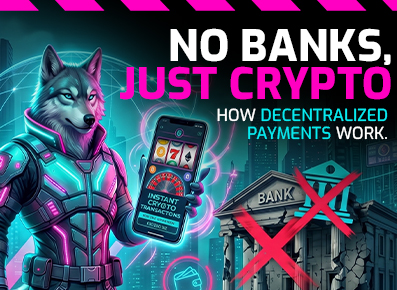

Traditional online casinos depend heavily on banks and payment processors to handle deposits and withdrawals. This often leads to delays, geographic restrictions, and additional fees. In contrast, the crypto casino no banks model removes intermediaries by using blockchain-based transactions. This approach enables faster, borderless payments and greater user control over funds. However, bankless gambling also introduces new risks and responsibilities. In this guide, we explain how decentralized payments work, why crypto casinos avoid banks, and what players should consider before using these systems.
Removing Banks from Gambling
Crypto casinos operate using blockchain networks instead of traditional financial institutions. When players deposit or withdraw funds, transactions are processed directly between wallets without involving banks.
This peer-to-peer structure eliminates intermediaries, reducing dependency on third-party approval systems. As a result, transactions can be executed globally without the need for
banking infrastructure.
Faster Global Payments
One of the main advantages of bankless gambling is speed. Traditional banking systems may take hours or even days to process withdrawals, especially across international borders.
With cryptocurrencies, transactions can be completed in minutes or even seconds, depending on the network. This allows players to access winnings more quickly and reduces waiting times
associated with manual approvals.
Fewer Restrictions and Greater Access
Bank-based systems often impose geographic and regulatory restrictions that limit access to online gambling platforms. Crypto casinos reduce these barriers by allowing users to transact
directly on blockchain networks.
Players in regions with restricted or unavailable traditional payment methods benefit from increased accessibility. However, local regulations still apply, and users remain responsible for
complying with applicable laws.
Downsides of Bankless Systems
While removing banks offers clear advantages, it also introduces trade-offs:
- No chargebacks or transaction reversals
- Increased responsibility for wallet security
- Exposure to crypto price volatility
- Limited consumer protection compared to traditional banking
Without intermediaries, users must take full responsibility for managing their funds and ensuring transaction accuracy.
Are Banks Completely Removed?
In most crypto casino transactions, banks are not directly involved. However, they may still play a role when users convert fiat currency into cryptocurrency or withdraw funds back into
traditional financial systems.
This means that while gambling itself can be bankless, entry and exit points may still interact with banking infrastructure.
FAQs
Are banks involved at all?
Generally, banks do not participate in crypto transactions within casinos, but they may facilitate the conversion between fiat and cryptocurrency.
Is bankless gambling legal?
Legality depends on local regulations. Using cryptocurrency does not bypass legal requirements in a user’s jurisdiction.
What are the risks?
Risks include irreversible transactions, security vulnerabilities, price volatility, and reduced consumer protections.
Conclusion
Crypto casinos operate on a bankless model that prioritizes speed, accessibility, and user control. By removing traditional financial intermediaries, they enable faster global payments and
fewer restrictions. However, this shift also places greater responsibility on players to manage security and understand the risks involved. While decentralized payments redefine the gambling experience, informed decision-making remains essential for safe participation.