Crypto casino fees are often misunderstood, especially by players new to blockchain gaming. While crypto casinos remove many traditional costs, such as bank processing fees, they still involve other types of charges that can impact deposits, withdrawals, and gameplay. These fees may come from the blockchain itself or from the platform’s internal policies. In this guide, we break down the different types of crypto casino fees, explain gas fees and blockchain costs, and show how players can reduce unnecessary expenses. Understanding these mechanics helps you make smarter decisions and keep more value from every transaction.
What Fees Do Crypto Casinos Charge?
Crypto casino fees generally fall into two categories: platform fees and blockchain-related fees. Platform fees may include withdrawal limits, wagering requirements tied to bonuses, or service charges set by the casino. Blockchain fees, on the other hand, are network-level costs required to process transactions on decentralized networks. Unlike traditional casinos, crypto platforms rarely charge deposit fees, but withdrawals and on-chain interactions can still carry costs depending on the network used.
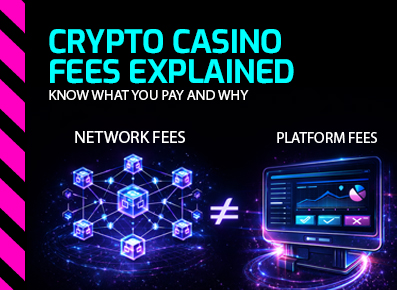
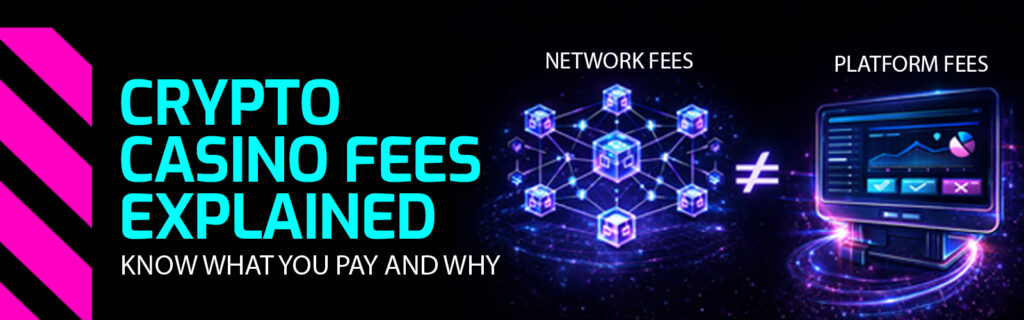
Network Fees vs Platform Fees
Blockchain fees, often referred to as gas fees, are paid to miners or validators who process transactions. These fees fluctuate based on network congestion and demand. Platform fees are
controlled by the casino and may change based on internal policies or promotional structures. The key difference is that blockchain fees are unavoidable when using on-chain transactions, while platform fees vary by casino and can sometimes be minimized by choosing the right cryptocurrencies.
Why Crypto Casino Fees Change Constantly
Crypto casino fees are dynamic because blockchain networks operate in real time. When networks become congested, gas fees increase. When activity slows, costs drop. Some casinos absorb part of these fees, while others pass them directly to users. Additionally, changes in token value and network upgrades can also influence transaction costs, making fee structures less predictable than traditional payment methods.
How to Reduce Crypto Casino Fees
Players can reduce crypto casino fees by selecting low-fee blockchains, timing transactions during off-peak hours, and using casinos that optimize payouts through batching or internal balances. Choosing cryptocurrencies with faster and cheaper networks can significantly lower costs over time. Understanding how fees work allows players to manage expenses without compromising speed or security.
FAQs
What fees do crypto casinos charge?
Most charge minimal platform fees, while blockchain networks require transaction fees for processing deposits and withdrawals.
What are gas fees?
Gas fees are blockchain fees paid to validators or miners to confirm transactions on a network.
Can players avoid fees?
Fees cannot be fully avoided, but they can be reduced by choosing efficient networks and timing transactions carefully.
Conclusion
Crypto casino fees are not hidden, but they are often overlooked. While crypto casinos eliminate many traditional banking costs, blockchain fees remain a core part of decentralized transactions. By understanding the difference between platform fees and network fees, players can make smarter choices, reduce unnecessary expenses, and enjoy a more efficient crypto gaming experience. Knowledge of crypto casino fees ultimately puts control back in the player’s hands.