Anonymous crypto gambling is often advertised as one of the main advantages of blockchain-based casinos. Many players are drawn to the idea of betting without sharing personal details or
relying on banks. However, anonymity in crypto gambling is more nuanced than it appears. Blockchain transactions are public by design, and regulatory requirements like KYC can still apply depending on the platform. In this article, we explain what anonymous crypto gambling truly means, how privacy works in crypto casinos, where transparency comes into play, and how
KYC gambling policies affect player anonymity. Understanding these distinctions helps players make informed decisions about privacy and compliance.
What Does Anonymous Crypto Gambling Really Mean?
Anonymous crypto gambling does not mean complete invisibility. In most cases, it means that players are not required to provide traditional banking details or extensive personal information
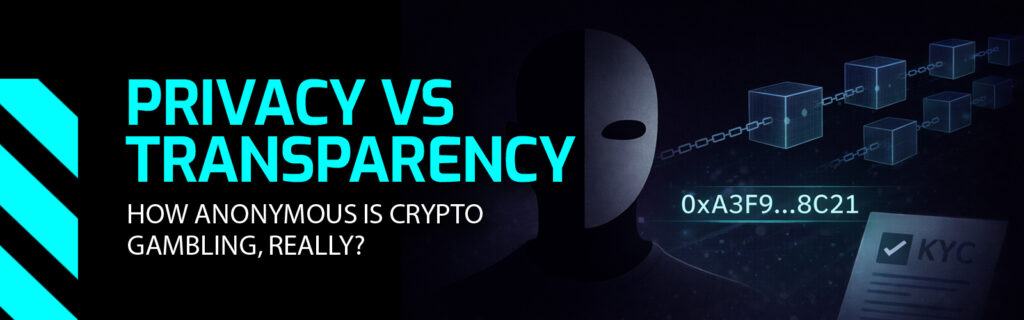
during gameplay. Instead, users interact with the platform using a wallet address. This provides a layer of pseudonymity rather than true anonymity. The casino does not automatically know who you are, but your activity is still linked to a unique blockchain address that can be observed publicly.
Blockchain Transparency and Privacy
Blockchains are transparent ledgers. Every transaction is recorded and can be viewed by anyone. While names and personal data are not visible, wallet addresses, transaction amounts, and timestamps are fully traceable. This transparency is what ensures fairness and security, but it also means that crypto transactions are not private in the traditional sense. Anyone who can link a wallet address to an identity can potentially trace gambling activity across the blockchain.
How KYC Impacts Crypto Gambling Anonymity
KYC gambling requirements vary by platform and jurisdiction. Some crypto casinos operate with minimal or optional KYC, allowing players to gamble without submitting identity documents until certain limits are reached. Others require full verification to comply with regulations. Once KYC is completed, anonymity is reduced, as the wallet address becomes associated with verified personal information. This trade-off often balances regulatory compliance with player privacy.
Can Gambling Activity Be Traced?
Yes, gambling activity can be traced on-chain. Blockchain analytics tools can follow wallet movements across platforms. While this does not automatically reveal a player’s identity, it does
create a visible transaction history. Privacy-focused practices, such as using separate wallets or privacy-oriented blockchains, can reduce traceability, but they do not guarantee full anonymity.
FAQs
Are crypto transactions anonymous?
They are pseudonymous. Wallet addresses are public but not directly linked to personal identities unless revealed.
Do casinos require KYC?
Some do, especially for larger withdrawals or regulatory compliance. Others offer limited or optional KYC.
Can gambling activity be traced?
Yes. Transactions are publicly visible on the blockchain and can be tracked through wallet addresses.
Conclusion
Anonymous crypto gambling offers more privacy than traditional online gambling, but it is not completely anonymous. Blockchain transparency ensures security and fairness while limiting full
privacy. KYC requirements further impact anonymity depending on the platform. Players seeking privacy should understand the balance between pseudonymity, transparency, and regulation. Knowing how anonymous crypto gambling really works allows players to choose platforms that align with their privacy expectations while staying informed and compliant.