
Categoria: Uncategorized

  • Common Crypto Gambling Mistakes

    Common Crypto Gambling Mistakes

    Crypto gambling combines market volatility with traditional gaming risk, creating a high-variance environment that can amplify both gains and losses. Many new players underestimate this dynamic and repeat avoidable crypto gambling mistakes. Without proper risk management, emotional discipline, and platform awareness, losses can accumulate quickly. This guide
    outlines the most common mistakes in crypto gambling, explains why beginners often lose fast, and provides practical beginner crypto gambling tips to promote smarter play.

    Mistake #1: Ignoring Bankroll Management

    One of the biggest mistakes is betting without a structured bankroll plan. Players often deposit funds without defining limits per session or per bet. Effective risk management typically involves allocating a fixed percentage of your total bankroll per wager and setting clear stop-loss thresholds. Without boundaries, volatility can quickly erode capital.

    Mistake #2: Chasing Losses

    Emotional betting is a recurring problem. After a losing streak, players may increase bet size to recover losses quickly. This behavior significantly increases exposure to risk and often
    accelerates financial decline. Crypto gambling already involves variance; compounding it with impulsive decisions magnifies potential damage.

    Mistake #3: Ignoring Volatility and RTP

    Not understanding game mechanics is another costly error. Different games have varying return-to-player (RTP) percentages and volatility levels. High-volatility games can produce large payouts but involve longer losing streaks. Beginners frequently choose games based on potential jackpot size rather than probability structure, leading to unrealistic expectations.

    Mistake #4: Overlooking Crypto-Specific Risks

    Crypto gambling introduces additional variables beyond traditional gaming:

    • Gas fees affecting withdrawals
    • Network congestion delaying transactions
    • Price volatility changing the value of winnings
    • Wallet security vulnerabilities

    Failing to account for these blockchain-related factors can reduce overall profitability.

    Mistake #5: Using Unverified Platforms

    Choosing platforms without reviewing transparency, audit information, or withdrawal terms exposes players to unnecessary risk. While secure crypto gambling environments exist, not all
    platforms operate with equal integrity. Due diligence is critical.

    Risk Management Basics for Beginners

    To reduce exposure to common crypto gambling mistakes:

    • Set a strict bankroll allocation
    • Use smaller bet sizes (1–2% of total bankroll per wager as a conservative reference)
    • Avoid emotional decision-making
    • Understand volatility before playing
    • Separate gambling funds from long-term crypto holdings

    Structured discipline improves sustainability and reduces rapid losses.

    FAQs

    What are the biggest mistakes in crypto gambling?

    Poor bankroll management, chasing losses, ignoring volatility, neglecting security, and choosing unverified platforms are among the most common.

    How much should beginners bet?

    Beginners should start conservatively, typically risking only a small percentage of their bankroll per bet to manage volatility.

    Is crypto gambling risky?

    Yes. It combines gambling variance with crypto price volatility and technical risks. Responsible play and platform due diligence are essential.

    Conclusion

    Crypto gambling mistakes often stem from emotional reactions, poor planning, and misunderstanding of risk mechanics. Beginners lose fast not because the system is unfair, but
    because variance, volatility, and impulsive behavior compound losses. Applying disciplined bankroll management, understanding game structure, and selecting secure platforms significantly improves long-term sustainability. In crypto gambling, strategy and self-control are as important as luck.

  • How to Stay Safe in Crypto Casinos

    How to Stay Safe in Crypto Casinos

    Crypto casinos offer fast transactions, global access, and enhanced privacy, but they also attract scams and malicious actors. Unlike traditional platforms, blockchain-based gambling
    places more responsibility on users to manage security. Understanding crypto casino safety is essential to protect funds, avoid fraudulent platforms, and reduce exposure to technical risks. In this guide, we examine common scam patterns, key security features to check before playing, practical wallet protection strategies, and warning signs players should never ignore.

    Common Scam Patterns in Crypto Casinos

    Fraudulent crypto casinos typically follow recognizable patterns. These include:

    • Unrealistic bonus offers with unclear wagering terms
    • Withdrawal delays without transparent explanations
    • Anonymous teams with no verifiable presence
    • Fake “provably fair” claims without technical proof
    • Phishing websites imitating legitimate brands

    Scam platforms often prioritize aggressive marketing over transparency. A lack of clear operational details is one of the strongest indicators of risk.

    Security Features to Check Before Playing

    Before depositing funds, evaluate whether the platform supports secure crypto gambling practices. Important features include:

    • Two-factor authentication (2FA)
    • Transparent withdrawal policies
    • Published smart contract audits (for decentralized platforms)
    • Clear terms and conditions
    • HTTPS encryption and secure wallet connections

    Reputable casinos provide detailed explanations of how funds are stored and processed. Vague or missing documentation should be treated as a red flag.

    How to Protect Your Wallet

    Wallet security is fundamental to crypto casino safety. Since blockchain transactions are irreversible, compromised wallets can result in permanent loss.

    Best practices include:

    • Using a non-custodial wallet you control
    • Enabling hardware wallet support when possible
    • Storing seed phrases offline
    • Avoiding public Wi-Fi when transacting
    • Verifying network compatibility before sending funds

    Never share private keys or recovery phrases. Legitimate platforms will never request them.

    Red Flags to Avoid

    Certain warning signs consistently appear in unsafe platforms:

    • No clear company information or licensing
    • Constantly changing domain names
    • Pressure to deposit quickly
    • No customer support or automated-only responses
    • Poorly written or inconsistent terms

    If a casino makes it difficult to verify legitimacy, the safest decision is to avoid it entirely.

    FAQs

    How to spot fake casinos?

    Check for transparency, verified audits, clear ownership information, and realistic promotional terms. Fake casinos often lack documentation and delay withdrawals.

    What security features matter?

    Two-factor authentication, encrypted connections, transparent policies, and smart contract audits are key indicators of a secure platform.

    Can wallets be compromised?

    Yes. Wallets can be compromised through phishing, malware, or exposure of private keys. Strong operational security significantly reduces risk.

    Conclusion

    Crypto casino safety depends on awareness, due diligence, and disciplined wallet management. While blockchain technology enhances transparency and efficiency, it does not eliminate fraud
    or technical risk. Recognizing common scam patterns, verifying security features, and protecting wallet credentials are critical steps toward secure crypto gambling. In decentralized environments, informed users remain the strongest line of defense.

  • Centralized vs Decentralized Crypto Casinos

    Centralized vs Decentralized Crypto Casinos

    The rise of blockchain gaming has introduced two distinct operational models: centralized crypto casinos and decentralized crypto casinos. While both allow players to gamble with digital assets, they differ significantly in custody, control, and risk structure. Understanding centralized vs. decentralized gambling is essential before choosing a platform. In this article, we explain who controls your funds in each model, how custody differs, the advantages and disadvantages of decentralization, and how risk profiles compare.

    What Is a Decentralized Crypto Casino?

    A decentralized crypto casino operates through blockchain-based smart contracts rather than a centralized operator controlling funds and transactions. These platforms often function as decentralized applications (dApps), where gameplay logic and payouts are automated on-chain.
    Players typically connect their wallets directly, maintaining control of their assets until a wager is placed.

    Who Controls Your Funds? Custody Explained

    The primary difference between centralized and decentralized gambling lies in custody.

    In a centralized crypto casino, players deposit funds into the platform’s internal wallet system. The casino controls custody of those funds until withdrawal. This model resembles traditional online gambling platforms but uses cryptocurrency instead of fiat payment systems.

    In a decentralized crypto casino, players interact directly with smart contracts from their personal wallets. Funds are transferred programmatically according to contract rules, without long-term custody held by a central authority. Control remains largely with the user, except during active contract interaction.

    Pros and Cons of Decentralization

    Advantages of Decentralized Casinos:

    • Greater transparency through on-chain verification
    • Reduced reliance on operator trust
    • Direct wallet interaction without traditional account registration
    • Automated payouts via smart contracts

    Disadvantages:

    • Smart contract vulnerabilities can pose technical risks
    • Limited customer support compared to centralized platforms
    • Regulatory uncertainty in some jurisdictions

    Centralized casinos, by contrast, may offer stronger customer service, promotions, and smoother user interfaces but require trust in the operator’s solvency and integrity.

    Risk Comparison

    Risk structures differ between the two models.

    Centralized casinos introduce counterparty risk. Since the platform controls deposited funds, users rely on the operator to process withdrawals honestly and maintain liquidity.

    Decentralized casinos reduce counterparty risk but introduce smart contract risk. Code vulnerabilities, poor audits, or design flaws can create systemic vulnerabilities. Additionally, full responsibility for wallet security rests with the player.

    Neither model is inherently safer; they distribute risk differently.

    Do dApps Require Accounts?

    Most decentralized applications do not require traditional account creation. Instead of registering with email and password credentials, users connect a crypto wallet to access the platform. However, regulatory requirements in some regions may still introduce KYC processes, depending on how the platform operates.

    FAQs

    What is a decentralized casino?

    A decentralized casino operates via blockchain smart contracts, allowing players to interact directly from their wallets without centralized fund custody.

    Are decentralized casinos safer?

    They reduce counterparty risk but introduce smart contract and technical risks. Safety depends on platform design and audits.

    Do dApps require accounts?

    Most dApps use wallet connections instead of traditional account registration, though some may require verification depending on regulations.

    Conclusion

    Centralized vs. decentralized gambling is ultimately a choice between trust models. Centralized platforms prioritize convenience and managed services but require custody of funds. Decentralized crypto casinos emphasize transparency and automation but rely heavily on secure code and user responsibility. Understanding who controls your funds and how risk is structured allows players to choose platforms aligned with their priorities in security, privacy, and usability.

  • How Smart Contracts Power Crypto Casinos

    How Smart Contracts Power Crypto Casinos

    Smart contracts are the technological backbone of decentralized gambling platforms. Unlike traditional online casinos, which rely on centralized systems to process bets and payouts, crypto casinos use blockchain smart contracts to automate core functions. These self-executing programs remove intermediaries, reduce manual approvals, and increase transparency. In this guide, we explain how smart contracts power crypto casinos, why automation matters, how instant payouts become possible, and what risks arise when code is poorly designed or unaudited.

    What Is a Smart Contract?

    A smart contract is a self-executing piece of code deployed on a blockchain. It automatically enforces predefined rules when specific conditions are met. In a smart contract crypto casino environment, this means that when a player places a bet, the outcome logic and payout distribution are executed programmatically without human intervention. Once deployed, the contract operates independently according to its coded instructions.

    Code Replaces Middlemen

    In traditional online gambling, operators manage bet validation, result processing, and withdrawals through centralized systems. Blockchain smart contracts replace this administrative layer with automated execution. Funds are held and distributed according to transparent logic embedded in the contract. This reduces reliance on trust, as outcomes are enforced by code rather than manual oversight.

    Why Automation Matters in Decentralized Gambling

    Automation enhances both speed and reliability. Since the smart contract processes bets and payouts directly on-chain, there is no need for manual approval workflows. This is one of the key reasons decentralized gambling platforms often advertise faster withdrawals and transparent game mechanics. Once conditions are met, for example, a winning result, the payout function executes automatically.

    How Payouts Become Instant

    Instant payouts are possible because the smart contract already controls the funds allocated to the game pool. When a winning condition is verified, the contract triggers the transfer to the player’s wallet. There is no separate accounting department or withdrawal review process involved. The only delay typically comes from blockchain confirmation times, not internal approval systems.

    Risks of Poorly Designed Smart Contracts

    While automation increases efficiency, it also introduces technical risk. Smart contracts are immutable once deployed, meaning coding errors cannot be easily corrected. A vulnerability or exploit in the contract logic can lead to financial losses. This is why reputable decentralized gambling platforms conduct third-party audits before launching. Poorly written or unaudited contracts remain one of the primary risks in the ecosystem.

    FAQs

    What is a smart contract?

    A smart contract is self-executing code on a blockchain that automatically enforces predefined rules when conditions are met.

    Can smart contracts fail?

    Yes. Bugs, vulnerabilities, or flawed logic can cause unintended outcomes or expose the contract to exploitation.

    Who audits smart contracts?

    Independent blockchain security firms typically review and test contracts before deployment to identify vulnerabilities and ensure reliability.

    Conclusion

    Smart contracts are fundamental to how crypto casinos operate. By replacing intermediaries with automated code, they enable transparent gameplay and faster payouts. However, decentralization does not eliminate risk; it shifts trust from institutions to software integrity. Understanding how blockchain smart contracts function allows players to evaluate decentralized gambling platforms more critically and choose systems that prioritize both efficiency and security.

  • Understanding Gas Fees in Crypto

    Understanding Gas Fees in Crypto

    Gas fees are one of the most misunderstood aspects of crypto transactions. Whether transferring funds to a wallet or interacting with a crypto casino, users often notice that transaction costs fluctuate, sometimes dramatically. These fees are not random. They are part of the core mechanism that keeps blockchain networks secure and operational. In this guide, we provide clear gas fees explained in practical terms, outline what influences crypto transaction fees, and show how blockchain costs are calculated. Understanding gas fees helps users avoid overpaying and transact more efficiently.

    What Are Gas Fees?

    Gas fees are payments made to validators or miners for processing and confirming transactions on a blockchain network. Every action performed on-chain, from sending cryptocurrency to
    executing a smart contract, requires computational resources. Gas represents the unit that measures this computational effort. The fee paid depends on how complex the transaction is and how congested the network currently is.

    Why Do Gas Fees Spike?

    Gas fees increase when network demand rises. Since block space is limited, users compete to have their transactions included in the next block. When activity surges during NFT launches, token migrations, or market volatility, users offer higher fees to prioritize their transactions. Validators naturally select transactions that offer higher rewards, causing average crypto transaction fees to climb.

    How Networks Calculate Blockchain Costs

    Gas fees are typically calculated using two components: gas limit and gas price. The gas limit represents the maximum computational work required for the transaction. The gas price is the amount a user is willing to pay per unit of gas. Multiply the two, and you get the total transaction cost. Some modern blockchains use dynamic fee mechanisms that automatically adjust base fees according to congestion levels, improving predictability but not eliminating fluctuations.

    Best Times to Transact

    Because blockchain costs are demand-driven, fees tend to be lower during periods of reduced activity. Off-peak hours, weekends, or calmer market conditions often result in cheaper
    transactions. Monitoring network activity before sending funds can significantly reduce expenses, especially for non-urgent transfers.

    Common Gas Fee Mistakes

    A frequent mistake is setting the gas price too low, causing transactions to remain pending for long periods. Another is overpaying unnecessarily during peak congestion. Some users also overlook the cost differences between blockchains, choosing expensive networks when cheaper alternatives are available. Understanding gas mechanics prevents these inefficiencies.

    FAQs

    What affects gas fees?

    Network congestion, transaction complexity, and user-selected gas price all influence fees.

    Are gas fees refundable?

    No. Once a transaction is processed on-chain, the gas fee is paid regardless of the transaction outcome.

    How can fees be minimized?

    Transact during low-traffic periods, use efficient blockchains, and avoid overbidding on gas prices.

    Conclusion

    Gas fees are not arbitrary charges; they are fundamental to blockchain security and decentralization. By understanding how crypto transaction fees are calculated and why they fluctuate, users gain greater control over their spending. Timing transactions wisely and choosing efficient networks can significantly reduce blockchain costs. Knowledge of gas fees
    ultimately turns uncertainty into strategy.

  • Crypto Casino Fees Explained

    Crypto Casino Fees Explained

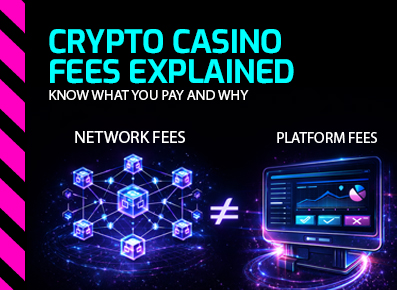
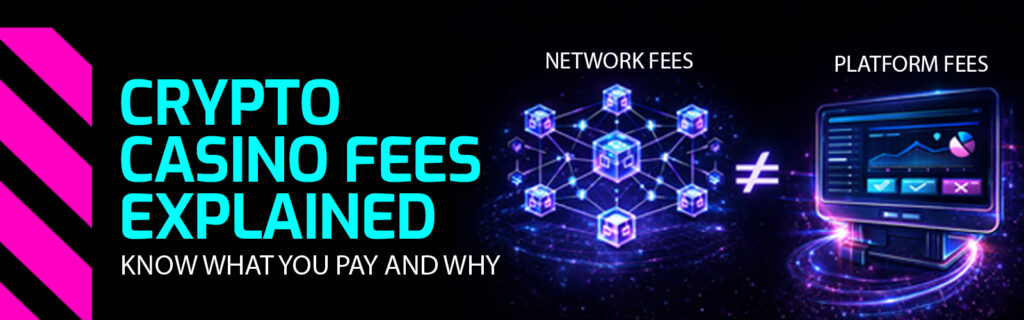
    Crypto casino fees are often misunderstood, especially by players new to blockchain gaming. While crypto casinos remove many traditional costs, such as bank processing fees, they still involve other types of charges that can impact deposits, withdrawals, and gameplay. These fees may come from the blockchain itself or from the platform’s internal policies. In this guide, we break down the different types of crypto casino fees, explain gas fees and blockchain costs, and show how players can reduce unnecessary expenses. Understanding these mechanics helps you make smarter decisions and keep more value from every transaction.

    What Fees Do Crypto Casinos Charge?

    Crypto casino fees generally fall into two categories: platform fees and blockchain-related fees. Platform fees may include withdrawal limits, wagering requirements tied to bonuses, or service charges set by the casino. Blockchain fees, on the other hand, are network-level costs required to process transactions on decentralized networks. Unlike traditional casinos, crypto platforms rarely charge deposit fees, but withdrawals and on-chain interactions can still carry costs depending on the network used.

    Network Fees vs Platform Fees

    Blockchain fees, often referred to as gas fees, are paid to miners or validators who process transactions. These fees fluctuate based on network congestion and demand. Platform fees are
    controlled by the casino and may change based on internal policies or promotional structures. The key difference is that blockchain fees are unavoidable when using on-chain transactions, while platform fees vary by casino and can sometimes be minimized by choosing the right cryptocurrencies.

    Why Crypto Casino Fees Change Constantly

    Crypto casino fees are dynamic because blockchain networks operate in real time. When networks become congested, gas fees increase. When activity slows, costs drop. Some casinos absorb part of these fees, while others pass them directly to users. Additionally, changes in token value and network upgrades can also influence transaction costs, making fee structures less predictable than traditional payment methods.

    How to Reduce Crypto Casino Fees

    Players can reduce crypto casino fees by selecting low-fee blockchains, timing transactions during off-peak hours, and using casinos that optimize payouts through batching or internal balances. Choosing cryptocurrencies with faster and cheaper networks can significantly lower costs over time. Understanding how fees work allows players to manage expenses without compromising speed or security.

    FAQs

    What fees do crypto casinos charge?

    Most charge minimal platform fees, while blockchain networks require transaction fees for processing deposits and withdrawals.

    What are gas fees?

    Gas fees are blockchain fees paid to validators or miners to confirm transactions on a network.

    Can players avoid fees?

    Fees cannot be fully avoided, but they can be reduced by choosing efficient networks and timing transactions carefully.

    Conclusion

    Crypto casino fees are not hidden, but they are often overlooked. While crypto casinos eliminate many traditional banking costs, blockchain fees remain a core part of decentralized transactions. By understanding the difference between platform fees and network fees, players can make smarter choices, reduce unnecessary expenses, and enjoy a more efficient crypto gaming experience. Knowledge of crypto casino fees ultimately puts control back in the player’s hands.

  • Is Crypto Gambling Anonymous?

    Is Crypto Gambling Anonymous?

    Anonymous crypto gambling is often advertised as one of the main advantages of blockchain-based casinos. Many players are drawn to the idea of betting without sharing personal details or
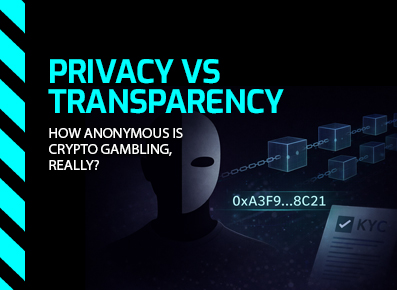
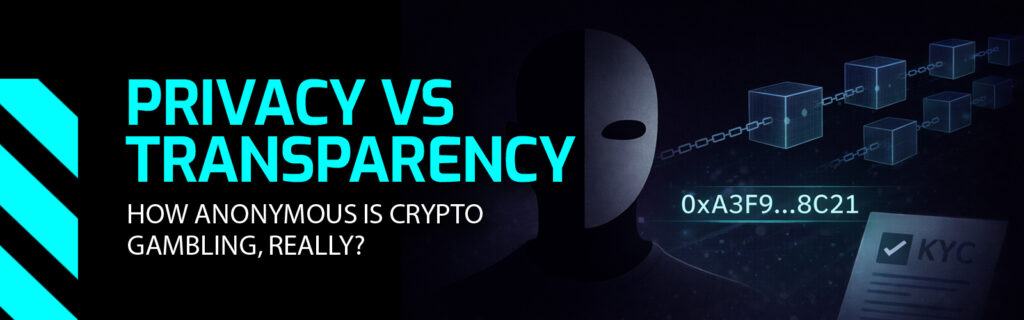
    relying on banks. However, anonymity in crypto gambling is more nuanced than it appears. Blockchain transactions are public by design, and regulatory requirements like KYC can still apply depending on the platform. In this article, we explain what anonymous crypto gambling truly means, how privacy works in crypto casinos, where transparency comes into play, and how
    KYC gambling policies affect player anonymity. Understanding these distinctions helps players make informed decisions about privacy and compliance.

    What Does Anonymous Crypto Gambling Really Mean?

    Anonymous crypto gambling does not mean complete invisibility. In most cases, it means that players are not required to provide traditional banking details or extensive personal information
    during gameplay. Instead, users interact with the platform using a wallet address. This provides a layer of pseudonymity rather than true anonymity. The casino does not automatically know who you are, but your activity is still linked to a unique blockchain address that can be observed publicly.

    Blockchain Transparency and Privacy

    Blockchains are transparent ledgers. Every transaction is recorded and can be viewed by anyone. While names and personal data are not visible, wallet addresses, transaction amounts, and timestamps are fully traceable. This transparency is what ensures fairness and security, but it also means that crypto transactions are not private in the traditional sense. Anyone who can link a wallet address to an identity can potentially trace gambling activity across the blockchain.

    How KYC Impacts Crypto Gambling Anonymity

    KYC gambling requirements vary by platform and jurisdiction. Some crypto casinos operate with minimal or optional KYC, allowing players to gamble without submitting identity documents until certain limits are reached. Others require full verification to comply with regulations. Once KYC is completed, anonymity is reduced, as the wallet address becomes associated with verified personal information. This trade-off often balances regulatory compliance with player privacy.

    Can Gambling Activity Be Traced?

    Yes, gambling activity can be traced on-chain. Blockchain analytics tools can follow wallet movements across platforms. While this does not automatically reveal a player’s identity, it does
    create a visible transaction history. Privacy-focused practices, such as using separate wallets or privacy-oriented blockchains, can reduce traceability, but they do not guarantee full anonymity.

    FAQs

    Are crypto transactions anonymous?

    They are pseudonymous. Wallet addresses are public but not directly linked to personal identities unless revealed.

    Do casinos require KYC?

    Some do, especially for larger withdrawals or regulatory compliance. Others offer limited or optional KYC.

    Can gambling activity be traced?

    Yes. Transactions are publicly visible on the blockchain and can be tracked through wallet addresses.

    Conclusion

    Anonymous crypto gambling offers more privacy than traditional online gambling, but it is not completely anonymous. Blockchain transparency ensures security and fairness while limiting full
    privacy. KYC requirements further impact anonymity depending on the platform. Players seeking privacy should understand the balance between pseudonymity, transparency, and regulation. Knowing how anonymous crypto gambling really works allows players to choose platforms that align with their privacy expectations while staying informed and compliant.

  • Why Crypto Casinos Offer Faster Withdrawals

    Why Crypto Casinos Offer Faster Withdrawals

    One of the biggest frustrations for online casino players has always been slow withdrawals. Traditional platforms often rely on banks, payment processors, and manual approval layers that can delay payouts for days. Crypto casinos change this dynamic completely. By using blockchain technology and automated systems, platforms like Rollchain are able to process withdrawals far more efficiently. In this article, you’ll learn why crypto casino withdrawals are faster, how instant crypto payouts actually work, and what factors can still cause delays. Understanding this process helps players manage expectations, choose the right networks, and fully benefit from fast withdrawals without unnecessary friction.

    What Makes Crypto Casino Withdrawals Different?

    Crypto casino withdrawals are fundamentally different because they operate without traditional financial intermediaries. Instead of routing payments through banks or card networks, payouts are sent directly from the casino’s wallet to the player’s wallet on the blockchain. This peer-to-peer structure removes approval bottlenecks and reduces dependency on third-party processors. As a result, crypto casino withdrawals are not limited by banking hours, geographic restrictions, or legacy compliance systems that slow down fiat transactions.

    How Crypto Withdrawals Work Step by Step

    When a player requests a withdrawal, the process is largely automated. The platform verifies that wagering requirements are met, generates a blockchain transaction, and broadcasts it to the network. Miners or validators then confirm the transaction according to the selected blockchain. Once confirmed, funds arrive directly in the player’s wallet. Because this system relies on predefined smart logic and blockchain validation, there is no need for human review in most cases, which significantly speeds up payouts.

    Benefits of Fast Crypto Withdrawals

    The most obvious advantage is speed, but fast withdrawals also improve transparency and trust. Players can track their transaction in real time on the blockchain, eliminating uncertainty
    about payment status. Faster payouts also reduce counterparty risk, as funds are not held for extended periods. Combined with instant crypto payouts, this creates a smoother and more reliable gaming experience, especially for high-frequency or high-volume players.

    What Can Still Cause Withdrawal Delays?

    While crypto withdrawals are faster, they are not always instant. Network congestion, high blockchain fees, or incorrect wallet addresses can cause delays. Some platforms may also apply temporary security checks for unusually large withdrawals. Choosing efficient networks, verifying wallet details carefully, and understanding withdrawal limits helps minimize these issues and ensures consistently fast withdrawals.

    FAQs

    How fast are crypto withdrawals?

    Most crypto casino withdrawals are processed within minutes, depending on the blockchain and network congestion.

    Are withdrawals automatic?

    Yes, in most cases withdrawals are automated and do not require manual approval.

    Are there withdrawal limits?

    Limits may exist depending on the platform, account level, or specific cryptocurrency used.

    Conclusion

    Crypto casinos offer faster withdrawals because they eliminate banks, automate payouts, and rely on transparent blockchain systems. This creates a more efficient and user-controlled
    payment experience compared to traditional online casinos. While network conditions can still affect timing, crypto casino withdrawals remain significantly faster overall. For players who value speed, transparency, and control over their funds, crypto casinos represent a clear evolution in online gaming payments.

  • How Crypto Transactions Work Step by Step

    How Crypto Transactions Work Step by Step

    Sending cryptocurrency may feel instant, but behind every click is a complex system working to ensure security, accuracy, and trust. Understanding how crypto transactions work helps users avoid common mistakes, manage expectations around speed and fees, and confidently interact with crypto platforms.

    In this guide, we break down the blockchain transaction process from start to finish. You will learn what happens after you press “send”, why confirmations are necessary, how miners and validators secure the network, and why a crypto transfer can sometimes appear stuck.

    What Is a Crypto Transaction?

    A crypto transaction is a digital transfer of value recorded on a blockchain. Instead of relying on banks, the transaction is validated by a decentralized network of computers.

    Each transaction includes the sender’s address, the recipient’s address, the amount being sent, and a cryptographic signature proving ownership. Once broadcast to the network, the transaction becomes part of the public blockchain ledger

    How Crypto Transactions Work Step by Step

    After clicking “send”, your wallet creates a transaction and signs it using your private key. This signature proves you own the funds without revealing your private key.

    The transaction is then broadcast to the network, where it enters a pool of unconfirmed transactions. Miners or validators select transactions from this pool and group them into blocks.

    Once included in a block and added to the blockchain, the transaction receives its first confirmation.

    Additional confirmations occur as new blocks are added on top, further securing the transaction and making it increasingly irreversible.

    Why Confirmations Exist

    Confirmations protect the network from double-spending and fraud. Each confirmation represents another block added after your transaction, making it more difficult to alter.

    Most platforms require a minimum number of confirmations before considering a transaction final. This ensures that funds are securely transferred and cannot be reversed by network
    manipulation.

    How Miners and Validators Secure Transactions

    On proof-of-work blockchains, miners compete to solve cryptographic puzzles that validate blocks. On proof-of-stake networks, validators are selected based on the amount of crypto they stake.

    Both systems serve the same purpose: ensuring transactions are legitimate and maintaining consensus across the network. Their incentives are aligned with honesty, as dishonest behavior is financially penalized.

    Why Transactions Sometimes Get Stuck

    Transactions can appear stuck when network congestion is high or when the transaction fee is set too low. Since miners and validators prioritize transactions with higher fees, low-fee transfers may remain unconfirmed longer.

    This does not mean the transaction is lost. It simply waits until the network processes it, or until the sender replaces it with a higher-fee version, if supported.

    FAQs

    How long do transactions take?

    It depends on the blockchain, network congestion, and transaction fees. Times can range from seconds to several minutes.

    Can crypto transactions be reversed?

    No. Once confirmed on the blockchain, transactions are irreversible.

    What affects confirmation speed?

    Network traffic, block size, and the transaction fee all influence confirmation time.

    Conclusion

    Understanding how crypto transactions work removes uncertainty and empowers users to interact confidently with blockchain platforms. From the moment you click “send” to final
    confirmation, every step is designed to prioritize security, transparency, and decentralization.

    By knowing what affects speed, confirmations, and fees, users can make smarter decisions and avoid unnecessary frustration.

    Learn the mechanics behind crypto transfers and navigate blockchain transactions with confidence.

  • Hot Wallets vs Cold Wallets: Which One Should You Use?

    Hot Wallets vs Cold Wallets: Which One Should You Use?

    Choosing the right wallet is one of the most important decisions in crypto. Not all wallets serve the same purpose, and understanding the difference between a hot wallet vs cold wallet can significantly impact your security and usability. While some users prioritize speed and convenience, others focus on long-term protection and risk reduction.

    In this guide, we explain how hot and cold wallets work, when each option makes sense, and how common hacks usually happen. Whether you’re storing crypto for gaming, daily transactions, or long-term holding, this article will help you make an informed decision.

    What Is a Hot Wallet?

    A hot wallet is a crypto wallet connected to the internet. It is typically used for frequent transactions and quick access to funds. Examples include browser wallets, mobile wallets, and
    desktop wallets.

    Because hot wallets are always online, they offer high convenience. They are commonly used for crypto gaming, online payments, and regular transfers. However, constant connectivity also increases exposure to potential security threats, making hot wallet security a key consideration.

    What Is a Cold Wallet?

    A cold wallet stores crypto offline, with no direct internet connection. This form of cold storage crypto is commonly achieved using hardware wallets or even paper wallets.

    Cold wallets are designed for long-term storage and maximum security. Since private keys never touch an online device, the risk of remote hacking is significantly reduced. The trade-off is reduced convenience, as accessing funds requires additional steps.

    How Hot and Cold Wallets Compare in Practice

    Hot wallets excel in speed and accessibility. They are ideal for everyday use, such as playing on crypto casinos, sending quick payments, or interacting with Web3 platforms.

    Cold wallets prioritize protection over convenience. They are best suited for holding larger balances that do not need frequent movement. Many experienced users combine both options, keeping spending funds in hot wallets and savings in cold storage.

    Why Hacks Usually Happen

    Most crypto hacks do not target the blockchain itself. Instead, they exploit user-side weaknesses such as phishing attacks, malicious browser extensions, compromised devices, or leaked private keys.

    Hot wallets are more exposed to these risks because they interact constantly with online environments. Cold wallets reduce attack surfaces by keeping private keys offline, making them far less vulnerable to remote exploitation.

    FAQs

    What is a hot wallet?

    A hot wallet is an internet-connected wallet designed for frequent and convenient transactions.

    What is a cold wallet?

    A cold wallet is an offline storage solution that keeps private keys disconnected from the internet.

    Which wallet is safer long term?

    Cold wallets are generally safer for long-term storage due to reduced exposure to online threats.

    Conclusion

    The choice between a hot wallet and a cold wallet depends on how you use crypto. Hot wallets offer speed and convenience, making them ideal for daily activity and gaming. Cold wallets provide stronger protection, making them better suited for long-term storage.

    By understanding the strengths and limitations of each option, users can create a balanced setup that maximizes both usability and security. In many cases, using both together offers the best of both worlds.

    Choose the wallet strategy that fits your crypto usage and protect your assets with confidence.